The 1965 to 1973 Window and Why the Old Alloy Behaved Badly
Most home inspectors have seen branch circuits with solid aluminum wiring, especially in homes built or remodeled between the mid-1960s and early 1970s. Aluminum wiring became common as the price of copper spiked, leading builders to switch materials for standard 15 and 20 amp circuits. The period to watch for is roughly 1965 to 1973. Some regions saw the practice end earlier, others a bit later, but this is the core window.
The aluminum wire used in this era, specifically the AA-1350 alloy, was not formulated for branch circuits. It had a higher coefficient of expansion than copper and was softer. When current passed through, the wire expanded and contracted more than copper or the steel screws in devices. Over time, connections could loosen. The wire was also prone to oxidation, which formed a thin, insulating layer that increased resistance at the contact point.
This combination meant that, even when installed correctly, these aluminum wires could develop hot spots at connections. The problem was not the aluminum itself, but its interaction with standard device terminals and lugs designed for copper. Newer aluminum alloys (AA-8000 series) used for larger wires perform better, but the older branch circuit wiring remains a concern.
Keep reading: Walk and Talk Inspections and Where Inspection Demand Is Heading
What the CPSC Hazard Research Actually Measured
The Consumer Product Safety Commission (CPSC) began investigating aluminum branch wiring after field failures and fire reports increased in the mid-1970s. Their studies focused on how often overheating or arcing occurred at connections, as well as the mechanisms that caused failures. Inspectors today still rely on these findings to guide recommendations.
CPSC field research involved inspecting thousands of homes with aluminum branch circuits. Investigators examined receptacles, switches, and splices for signs of overheating, such as melted insulation, scorched device bodies, discolored wiring, and even visible charring of wood framing. They also took apart failed connections in a lab to analyze what had happened at the metal-to-metal interface.
One key finding was that the failure rate at connections using pre-1972 aluminum wire and standard devices was much higher than with copper wire. Failures were especially frequent at screw terminals and push-in connections. The CPSC demonstrated that even properly torqued connections could loosen over time, leading to increased resistance, heat buildup, and, in some cases, ignition of nearby combustibles.
Identifying It: Cable Jacket Markings, Panel Conductors, Device Screws
Spotting aluminum branch wiring starts with knowing where to look. The most direct method is to check visible wiring in the panel or attic, but confirmation often involves more than one clue.
Cable Jacket Markings
Aluminum cables have distinct jacket markings. Look for "AL" or "ALUMINUM" stamped along the length of the nonmetallic sheathing or on armored cable. Some brands, like "ALUMAFLEX," are even more obvious. In attics or crawl spaces, original cable jackets are often legible, especially where insulation has not been disturbed.
Panel Conductors
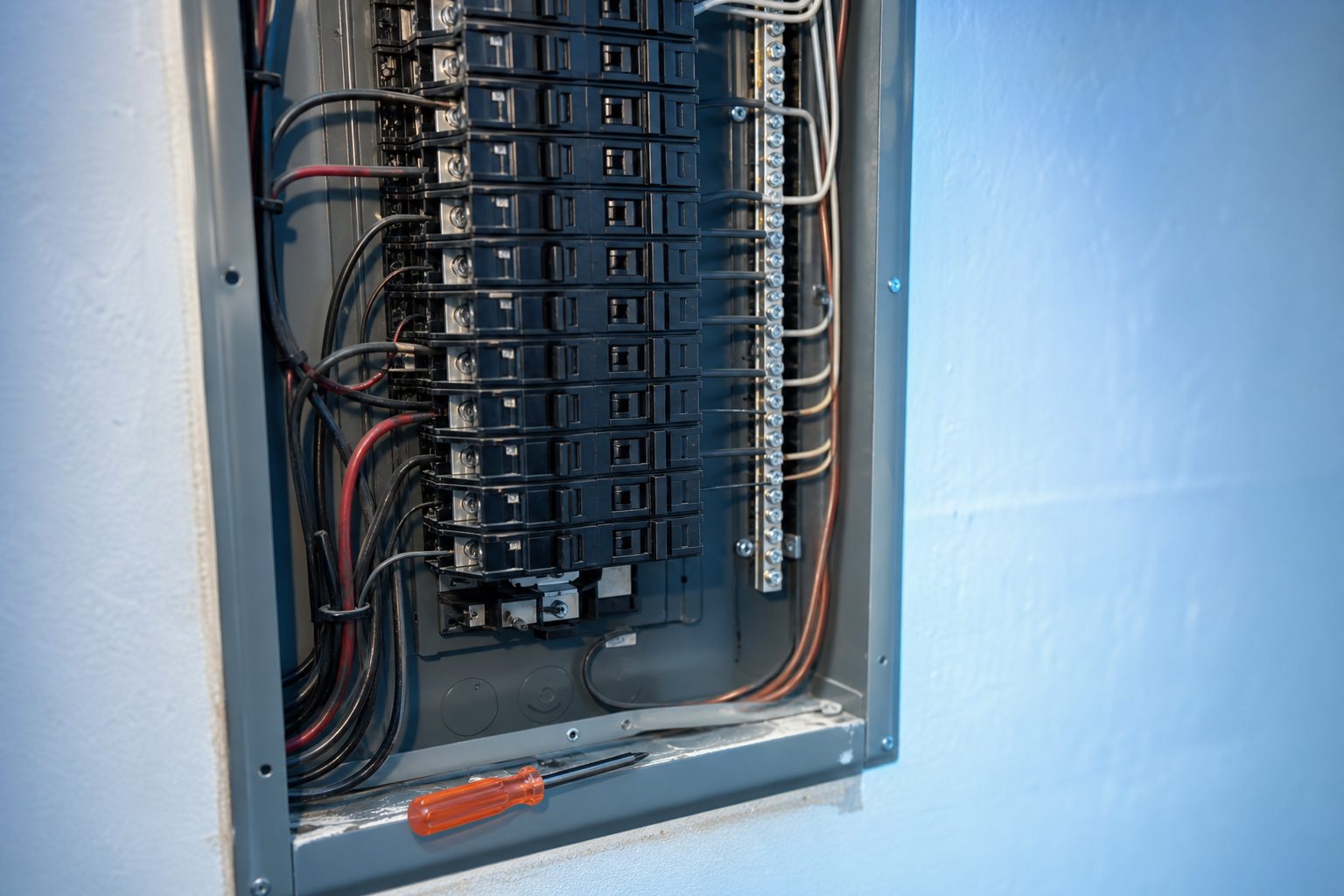
Inside the main or sub-panel, aluminum branch wires are usually easy to spot. They appear dull gray, not the reddish hue of copper. Branch wires are typically 10, 12, or 14 gauge. Since many homes have aluminum service entrance wires, verify you are looking at circuits serving outlets and lights, not just the main lugs.
Device Screws
Removing the cover plate from a suspect receptacle or switch allows a closer look. Aluminum wires at the terminal screws are a telltale sign, especially if you see multiple circuits wired this way. Take care: disturbing old aluminum wiring can cause more harm than good. Avoid disconnecting anything unless specifically contracted and licensed to do so.
Keep reading: The Attic Checklist: Ventilation, Insulation, and Framing Defects
Signs of Overheating at Terminations, Receptacles, and Switches
Overheating shows up in several ways, and the most common clues are found at terminations. Inspectors should look for both subtle and obvious signs.
- Discoloration: Outlets and switches with darkened or melted areas near the screw terminals are a red flag. The wall plate itself may be discolored or warped.
- Odor: A faint burnt plastic smell near outlets, even if there is no visible damage, suggests heat-damaged insulation.
- Loose Devices: Receptacles or switches that wiggle in the box may have been loosened by repeated heating and cooling, or by prior repairs.
- Warmth: Outlets or cover plates that feel unusually warm during use can indicate resistive heating at the connection point.
- Visible Damage: In extreme cases, you may see charred wood framing, scorched drywall, or melted insulation.
Where possible, note whether the signs are widespread or limited to a single device. Isolated damage may indicate overloading or a poor connection at one point, while multiple affected devices throughout a home argue for systemic failure.
The Two Repairs CPSC Recognizes: COPALUM and AlumiConn
The CPSC has tested several repair methods and recognizes only two as permanent, proven solutions for aluminum branch wiring. Both involve a specialized approach to joining aluminum wires to copper pigtails, reducing the risk of loose or overheating connections.
COPALUM Crimp Connectors
COPALUM is a proprietary crimp connector that uses a special tool to cold-weld an aluminum wire to a short copper wire. This creates a gas-tight joint that resists loosening and oxidation. The copper pigtail can then be safely connected to standard outlets and switches. Installation must be done by a contractor certified for the COPALUM system, since the tool and connectors are not available to the general public or most electricians.
AlumiConn Terminal Blocks
AlumiConn connectors are a more recent addition. These are three-port set-screw terminal blocks made of aluminum alloy, UL-listed for joining aluminum to copper. The installer strips the ends of the aluminum and copper wires, inserts them in the block, and torques the screws to a specific value with a calibrated screwdriver. The result is a secure, low-resistance splice that accommodates aluminum's expansion and contraction.
Both methods are recognized as permanent repairs. They allow the rest of the home's wiring to remain in place, with only the connection points upgraded for safety.
See how SlabToRoof handles this for home inspection
Why Pigtailing With Ordinary Wire Nuts Is Not an Approved Fix
Many older repairs attempted to solve the aluminum wiring problem by pigtailing: splicing a short copper wire onto the aluminum using a regular twist-on wire connector. This practice was once widespread, but testing and field failures have shown it is not reliable for aluminum branch circuits.
The issue is that most common wire nuts are not rated for aluminum-to-copper connections. Aluminum wire tends to cold flow and oxidize, and standard wire nuts cannot maintain a tight, gas-free connection over years of heating and cooling cycles. Loose connections lead to increased resistance, arcing, and heat buildup, the same problems as the original device screws.
The CPSC and UL have both determined that only connectors specifically listed for aluminum-to-copper splicing, such as COPALUM or AlumiConn, are suitable. Ordinary wire nuts, even those labeled for general use, do not provide the secure, long-term bond needed to prevent failures.
Aluminum Service and Feeder Conductors Are a Different Question
It is important to distinguish branch circuit aluminum wiring from larger aluminum conductors used for service entrance and main feeders. These larger wires are often found in homes built from the 1950s through today, especially for 100 amp and larger services.
The alloys used for service conductors are different, as are the connection methods. Lugs and terminations for large aluminum wires are specifically rated for the material and are designed to accommodate its expansion. Electricians applying anti-oxidant paste and torquing lugs to the manufacturer's specifications can achieve a reliable connection.
While aluminum service entrance and feeder conductors can develop problems if installed incorrectly, they do not have the same documented failure rate as branch circuit wiring. Inspectors should note them, but the presence of aluminum at the main lugs is not in itself a defect requiring the same repairs as branch circuits.
Writing the Finding Without Estimating a Rewire Cost
When aluminum branch wiring is found, the inspection report needs to be clear, factual, and actionable. However, inspectors should never estimate the cost of a full rewire or offer repair price guidance. Instead, focus on describing the observed condition, the known hazards, and the recognized repair options.
A typical report narrative may identify the presence of solid aluminum branch conductors in 15 and 20 amp circuits, with or without visible signs of overheating at device terminations. The narrative should reference the known hazards of increased fire risk, the CPSC's findings, and the two accepted repair methods: COPALUM or AlumiConn. Include a recommendation for further evaluation and correction by a licensed electrical contractor experienced with aluminum wiring repairs.
Supporting the finding with annotated photos is helpful. Pictures of panel conductors, cable jacket markings, and any overheated or damaged devices make the report more persuasive and easier for buyers and agents to understand. Using a report-writing tool that allows photo annotation and same-day delivery ensures that critical safety concerns are documented promptly and clearly, supporting both your client's decision and your own risk management.