The second shift at the kitchen table
Two to three hours of retyping per inspection, after a day on ladders and knees. It is the work nobody pays for and the reason inspectors cap out at two jobs a day.
11 hoursunbilled desk time per weekSlabToRoof builds the inspection report while you are still walking the house, so the narrative, the photos and the summary finish when the walkthrough finishes. By the time the ladder is back on the rack, the buyer and the listing agent have a branded PDF and a web link that opens cleanly on a phone.
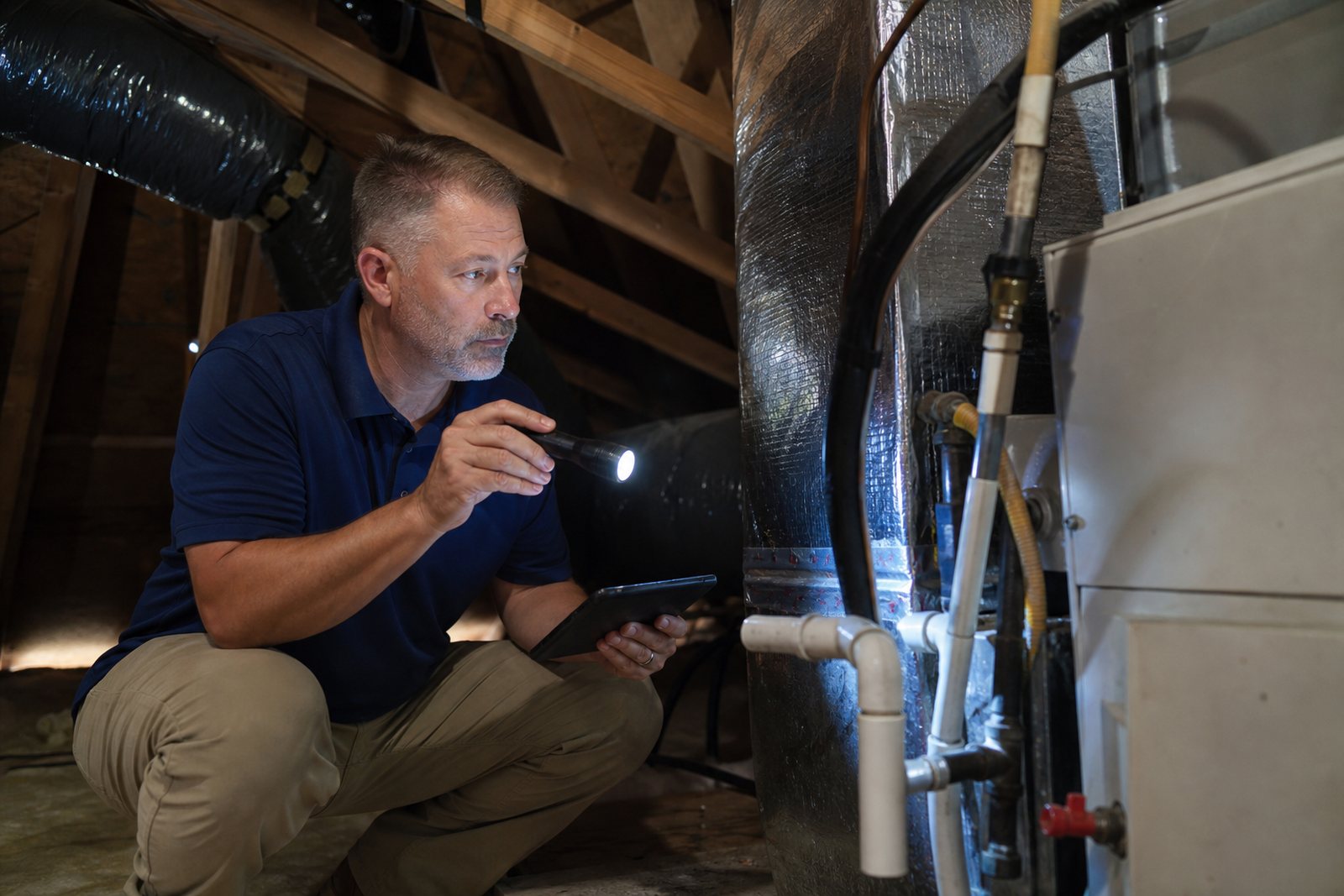
Every inspector knows the second shift. The truck is parked, dinner is cold, and you are still matching photo 214 to the note you dictated in a 28 inch crawlspace. Here is what that shift actually costs across a normal week.
Two to three hours of retyping per inspection, after a day on ladders and knees. It is the work nobody pays for and the reason inspectors cap out at two jobs a day.
11 hoursunbilled desk time per weekA report that shows up the next afternoon eats a day of a short option period. The agent does not complain, she just books the other inspector next time.
$4,900yearly revenue from one steady agentThe buyer calls about item 14 and you are scrolling a camera roll of 300 near identical shots of a service panel. Every callback burns your evening twice.
38 minutesaverage unbilled callbackYou drove back out, photographed the repaired flashing and emailed a two page addendum. Three weeks later you realize no invoice ever went out for it.
$185per re-inspection written offThe order follows how inspectors actually move through a house: exterior, structure, mechanicals, interior. Nothing here asks you to change the route you already walk.
The address, the client, the buying agent and the listing agent arrive from your scheduler through a webhook, or you type them once. Pick the template that matches your state standards of practice and the square footage sets your default section list.
Ready in about 40 secondsSpeak the finding, shoot the photo, drag an arrow onto the defect and pick a severity. The comment library fills the implication and the recommendation in your own wording, and the item lands in the right section with the right number.
Works with gloves and no signalThe summary sorts itself by severity, flags any section you left empty, and shows every photo beside the sentence it belongs to. You read it once, fix two words, and sign.
Average review time, 9 minutesThe client gets a branded PDF and a web report that opens on a phone without pinching. The agent gets a repair request list she can forward straight to her seller, and your invoice goes out in the same click.
Delivery confirmations logged
Nothing in this list came from a product meeting. Each one came from riding along on inspections in six states and watching where the evening actually disappears.
Drag an arrow, drop a circle, type a six word caption, and the marked copy is saved beside the original frame. Every photo keeps its capture timestamp, which settles a disputed date without an argument.
Import the narratives you already write and tag them by system, severity and state. Three letters pull the whole observation, implication and recommendation, and an edit on site never overwrites your master wording.
Section outlines follow the InterNACHI and ASHI standards, with state specific spines for Texas, Florida, North Carolina and 11 more. Sign off is blocked while a required system is still untouched, so no report leaves with an empty roof section.
One button builds the PDF, the mobile web report and the agent repair list, all carrying your logo, license number and colors. Each send is logged with a timestamp and an opened receipt you can point to six months later.
The summary exports as a clean repair request document with item numbers, photos and your original sentences intact. Listing agents send it to the seller as is, which is the whole reason they keep your card in the truck.
Dictation, photos and checklists all record on the device when there is no bar of signal in a 30 inch crawl. The job syncs the moment you are back at the truck, and nothing you said in the dark is ever lost.
These four numbers come from inspection logs across the account base for the 2025 calendar year, compared with each inspector's own timing in the 60 days before they moved over.
The narrative is written during the walkthrough instead of after it. Across 41,600 inspections logged in 2025, 94 out of every 100 reports went out before the inspector went to bed.
Timed from the last photo of the walkthrough to the delivery receipt. The saving comes from three places: no retyping, no photo matching, and no rebuilding the summary by hand.
Agents send the next buyer to whoever reports first and writes plainly. Inspectors past their first full year on SlabToRoof book 38 percent more jobs from agents who had used them at least once before.
One additional inspection per week at a $275 average fee adds $14,300 across a year. The evening you stop spending at the desk is exactly where that extra slot comes from.
Three owners running solo or two inspector operations, in three very different housing stocks: Midwest basements, desert slab on grade, and North Shore century homes.
I used to promise the buyer a report by tomorrow evening and then hate myself at midnight putting it together. Now I hit send in the driveway before I pull out of the neighborhood. Two agents told me straight out that this is why they use me over the guy who charges eighty dollars less.
The photo markup is the piece I would not give back. I circle the corroded fitting, type six words, and the buyer sees the thing I saw instead of a picture of a beige wall. My callbacks dropped to almost nothing inside the first month, and the ones I do get take four minutes.
Two of us used to fight over one template and the reports never matched. Now Kyle writes his sections, I write mine, and it comes out as one document in one voice. We cleared 61 inspections last October without hiring a third person or working a Sunday.
Inspections assembled and delivered through SlabToRoof during 2025.
Median time from taking a defect photo to a filed, annotated, numbered item.
Where licensed inspectors are running their daily report workflow on the platform.
Unlimited reports and unlimited photo storage on every plan. No per report charge, no delivery charge, and no separate line item for the agent copy.
One license, one truck
$39 per month
Owner plus a second set of boots
$89 per month
Up to eight inspectors on one account
$179 per month
Every plan is billed monthly in US dollars and can be cancelled at any time from the billing screen. There is no setup fee, no annual contract, and no charge for the reports you already delivered.
Straight answers, the same ones you would get on the phone with our team on a Tuesday morning.
The Solo Inspector plan is $39 per month and covers one licensed inspector with unlimited reports and unlimited photos. Two Inspector is $89 per month and Firm is $179 per month for up to eight inspectors on one account. There is no per report fee, no charge for delivering to an agent, and no storage tier that bills you for keeping last season photos. Every plan is billed monthly and you can cancel from the account screen at any time.
Most inspectors are delivering live reports within one afternoon. You import your current narrative library as a spreadsheet or paste it section by section, then pick a state standards of practice outline as the spine. Our team rebuilds one of your recent reports inside SlabToRoof at no charge so you can compare the two side by side before you switch. Inspectors who write in their own voice usually spend one more evening tuning comment wording, and that is the last time they touch it.
Photos, narratives and client records sit in United States data centers on infrastructure with SOC 2 aligned controls, encrypted in transit and at rest. Your reports belong to you, so a single export produces every PDF, every original photo at full resolution, and a CSV of your inspection history. We never sell client contact information and we do not hand agent lists to anyone. If you close your account, the archive stays available for 90 days so you can pull anything you missed.
Yes. Inspections can be created from your scheduling software through an inbound webhook, so a booked job lands on your phone with the address, the agent and the client already attached. Delivered reports push a copy to Google Drive or Dropbox, and paid invoices can be posted to QuickBooks Online. If you use a tool we have not wired up yet, the open API and the Zapier connection cover almost every request that reaches support.
You cancel in the billing screen and the plan stops at the end of the month you already paid for. There is no exit fee, no annual lock, and nobody will put you through a retention call. Before access ends, run the full export so you keep the PDFs, the original photos and the comment library you built. Inspectors who come back a season later find their template exactly as they left it.
No, because the words stay yours. SlabToRoof does not ship a stock narrative library that turns every inspector in the county into one voice: you bring your own observations, implications and recommendations, and the software handles assembly, numbering and delivery. Photo annotations follow your arrow and callout style, and the cover carries your license number and your logo. Agents notice the format, not the software behind it.
The Defect Log is our own magazine for licensed inspectors: radon protocol, roof access, report wording that survives a dispute, and the arithmetic behind a one or two inspector business. Three recent pieces are below.
How many inspections you run, what you write in now, and what time you usually stop typing. We will take one of your recent reports, rebuild it inside SlabToRoof, and walk you through the two side by side on a screen share.